
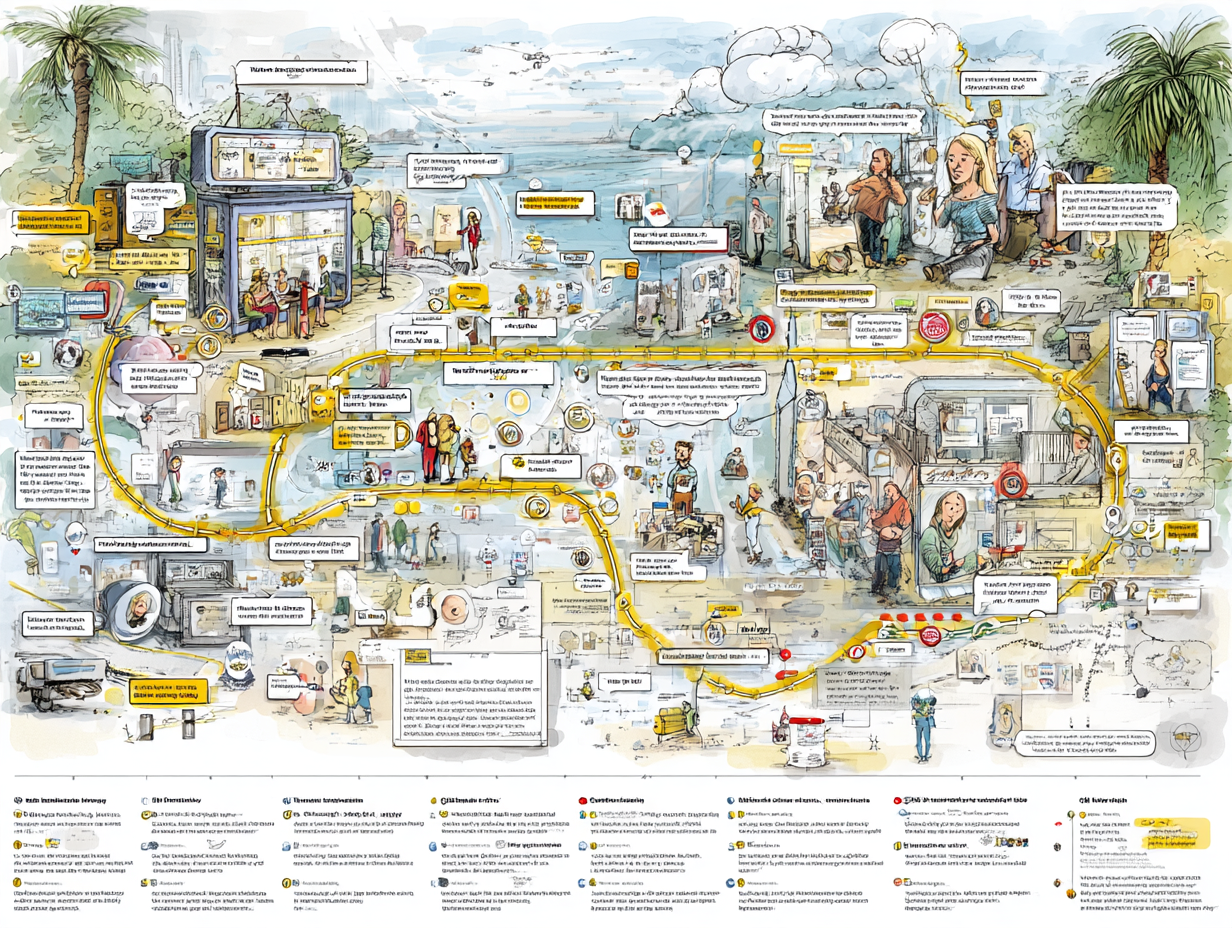
A customer journey map shows what someone does from recognising a need to buying and returning. Build it from evidence for one audience. Then use it to find where a real customer gets stuck and decide what to change.
What a customer journey map reveals
The map helps marketing and sales see the journey from the customer’s side. It brings together the decisions customers make, the information they need and the friction they encounter. In one illustration, a renovation studio lost 60% of prospects between the first call and consultation. After the team asked better questions in the call, conversion at that step nearly doubled.
Six stages and the points where customers meet you
- Awareness: someone recognises a need, such as renovating a flat.
- Interest: they look for information and advice.
- Consideration: they compare firms, reviews, portfolios and prices.
- Decision: they choose an option and send an enquiry, place an order or book a meeting.
- Purchase: they pay or sign a contract.
- Loyalty: they return, recommend the business or stay involved.
Touchpoints include ads, social posts, your website, a consultation, a showroom, emails, reviews and after-sales service. A person may see a Reel, open your website, return a week later to read a case study and only then send an enquiry.
How to build the map
- Choose one audience segment. Tourists and residents at a Spanish language school need different maps.
- Collect interviews, CRM and analytics data, call records and observations from sales.
- Write down each stage and what the customer is trying to do at that point.
- Identify the relevant touchpoints and what someone expects from each.
- Find the obstacles. For example, some visitors leave when the site gives no indication of price.
- Test what explains the obstacle. If customers worry about delays, check whether a clear deadline changes the response.
- Choose one improvement, give it an owner and measure the change.
A worked example from home renovation
A prospective customer saves apartment ideas on Pinterest, searches for a renovation company in Barcelona, compares portfolios and calls two firms. A brief, impersonal reply leaves them with questions. The competitor shows before-and-after videos and explains the process, so the customer chooses that firm.
Possible changes include training the sales team, sending a relevant case after the call and tracking consultation and purchase in the CRM. In the example in the original guide, changes to this stage were associated with a 32% rise in sales.
How to keep the map useful
Use real observations and a particular customer group. Keep the map short enough for sales and marketing to use at a review. If the map identifies an obstacle, improve one touchpoint and follow its impact in your analytics or CRM. Return to it after a change in the offer or sales process.