
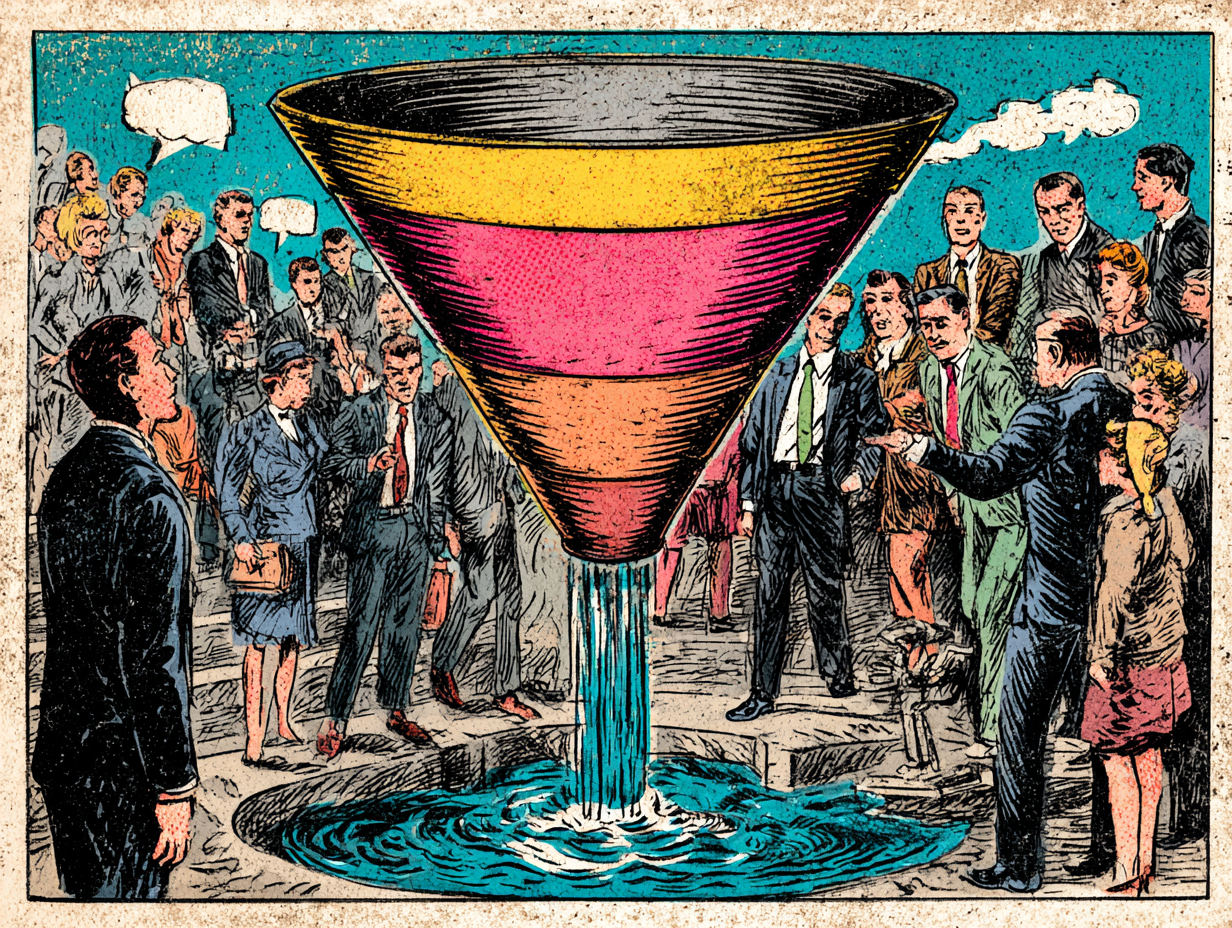
The funnel shows what happens after marketing gets attention. Measure each step so you know whether the issue lies in the audience, landing page, response or sale.
Define stages you can observe
For a service, the path might be ad, page visit, case study, enquiry, consultation, contract and payment. Use a consistent definition and date for each stage. Entrants will not all move through in the same order.
Find the biggest loss
Compare click to page, page to enquiry, enquiry to consultation and consultation to sale. In an example, 72% of leads waited at the callback stage. More ads would have added to the queue. Check response time and the questions sales needs to ask.
Calculate with compatible denominators
Conversion is the count reaching a stage divided by those entering from the previous stage. A repair example starts with 1,000 visitors and 120 enquiries (12%), then 90 consultations, 46 sales and 11 repeat orders. That is about 38.3% from enquiry to sale and 51.1% from consultation to sale.
Test one fix
Compare conversion by channel. Review the offer, page, proof, reply and follow-up. Try a clearer headline, quicker reply or better case example on one stage. Measure sales and contribution before scaling.
